When I came down for breakfast in the morning, the cat was in the living room. I stroked its fur, and found it wet. It had been raining again during the night. While eating breakfast, I looked outside. It looked like the rain had stopped, but the sky was still dark and grey. The forecast for the day was uncertain. But I do believe that fortune favours the brave, and I was soon ready to go. I bid goodbye to my host of the B&B and went on my way.
To get back on the trail, I had to go back up through the village to the centre of Hallines. I was still a few kilometres off the official route. From Hallines, the direct way back onto the trail was to follow the D211 road for about 2km to Esquerdes and rejoin the trail there. I am not keen on walking on D roads in France. They are quite variable in quality and traffic levels. They can be quiet country roads, or they can be busy main roads with articulated lorries regularly thundering past. This one was somewhere in between those extremes, but luckily it had a footpath in the margin beside the road. I guess that when two villages are as close to each other as Hallines and Esquerdes, people walk between the two.
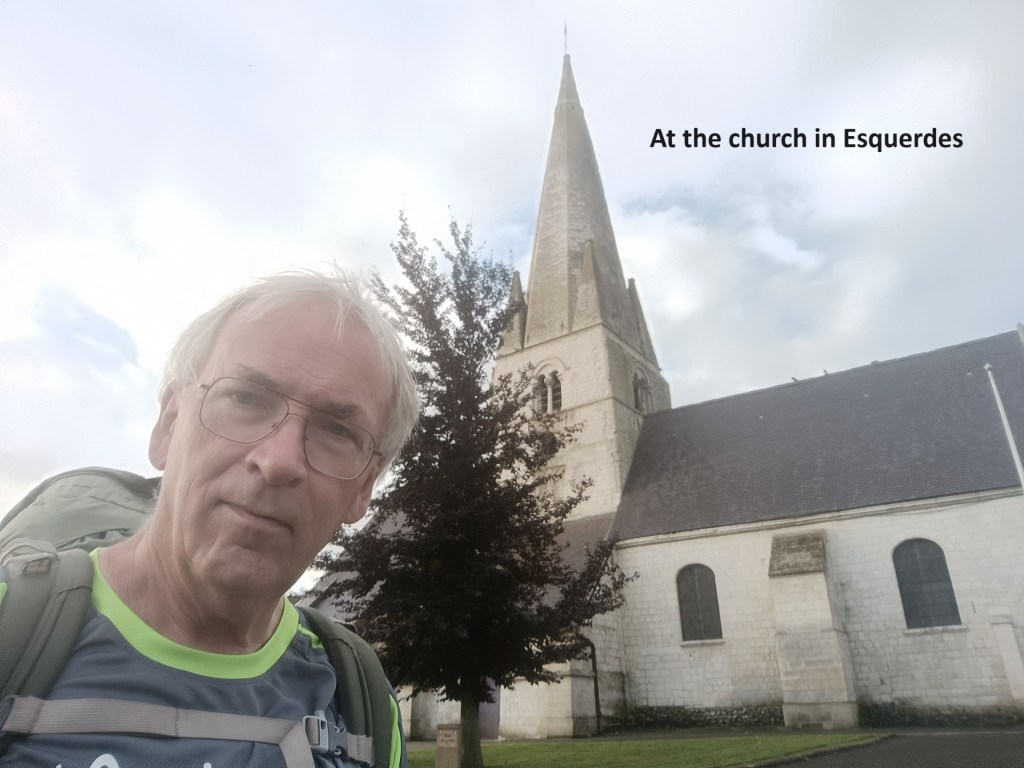
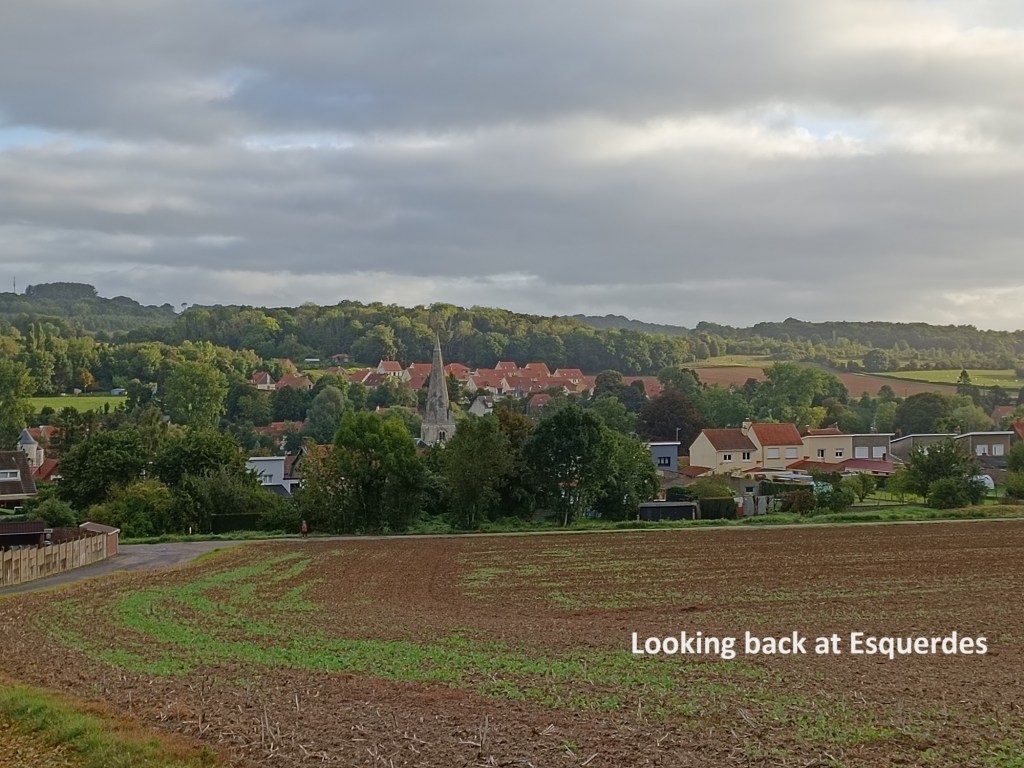
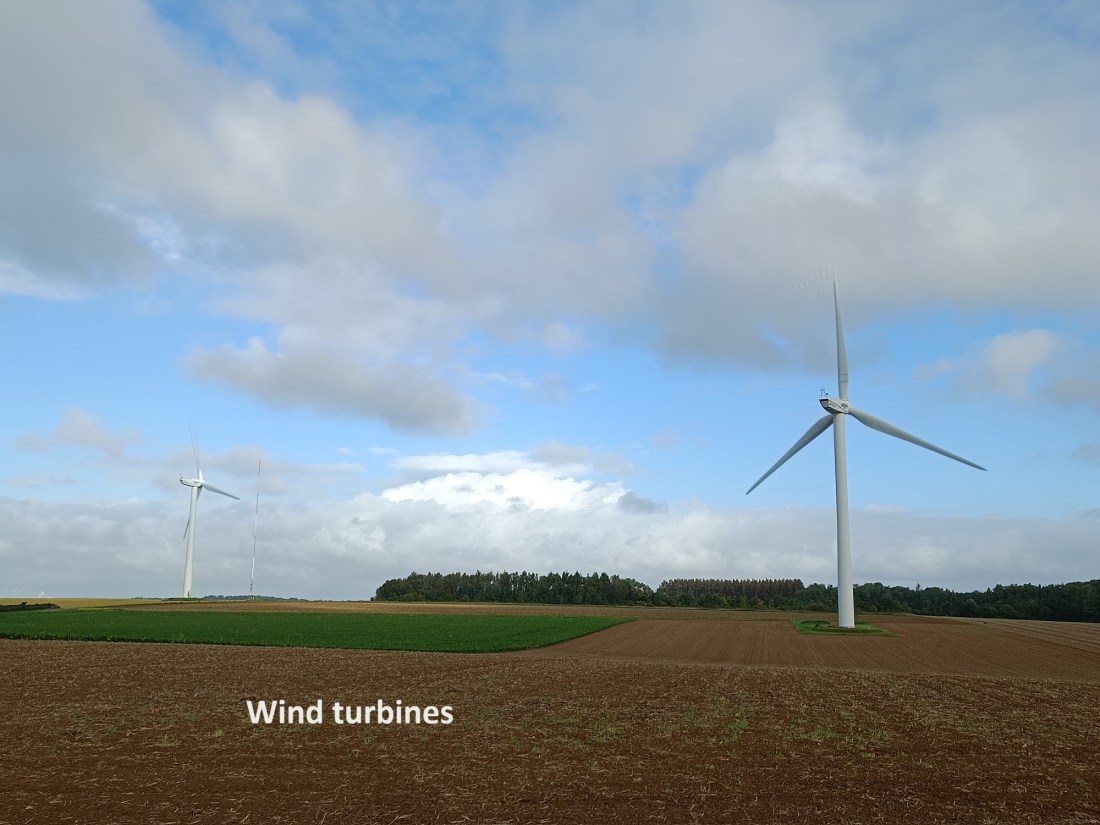
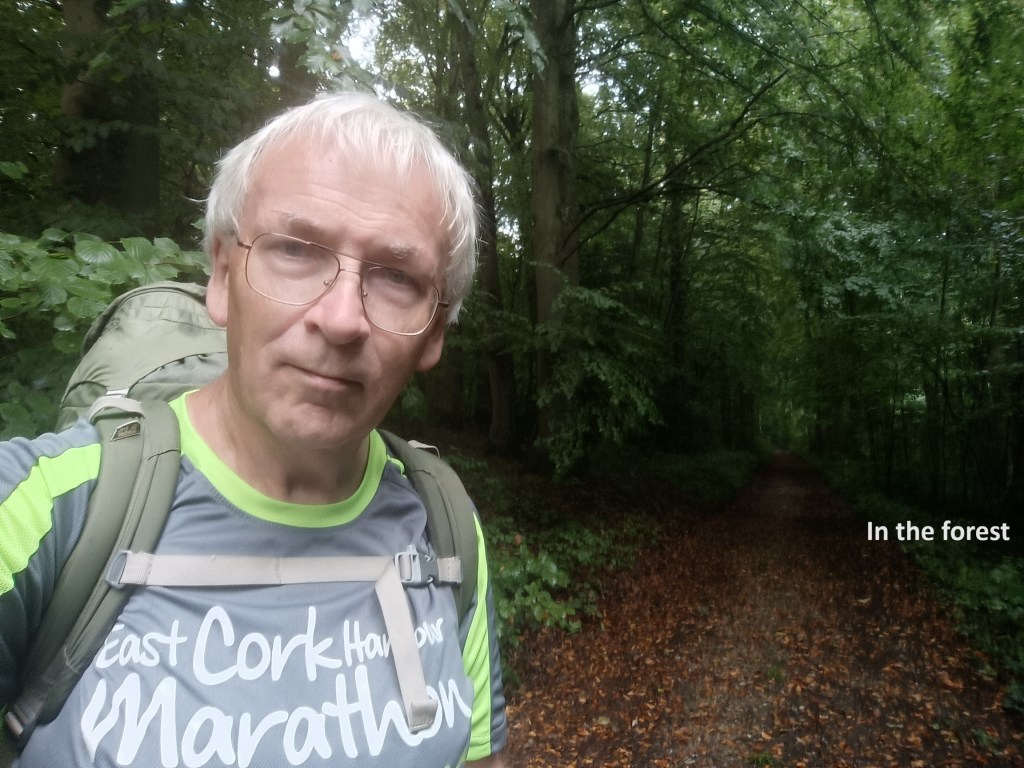
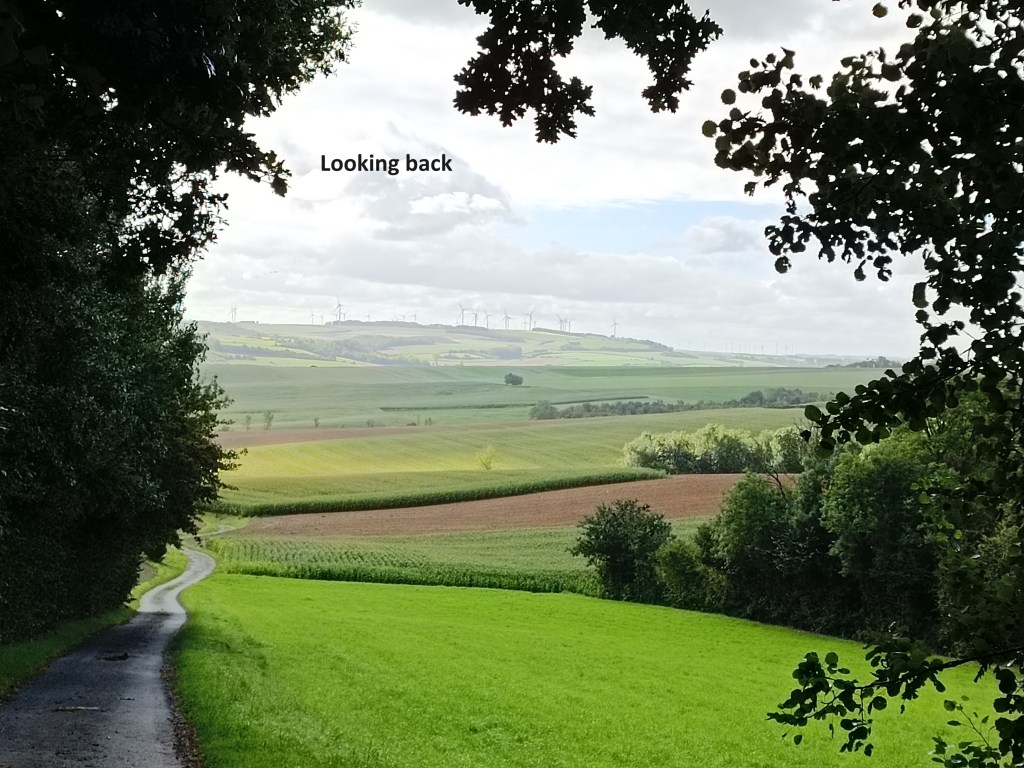
And so I came safely to Esquerdes. There were some businesses in the village just opening up as I got there. I went straight through the village, passing the church. I might have gone in had it not been closed. The trail takes a circuitous route around the western end of the village before going up the hill to the south. Not far out of Esquerdes, the route goes into a forest, emerging some distance later near the top of a small hill. The hill is flat, and it the site of several wind turbines. I went on over the hill and into the dip below to reach the hamlet of Crehem. Crehem is too small to have any amenities, so I wasted no time and kept going.

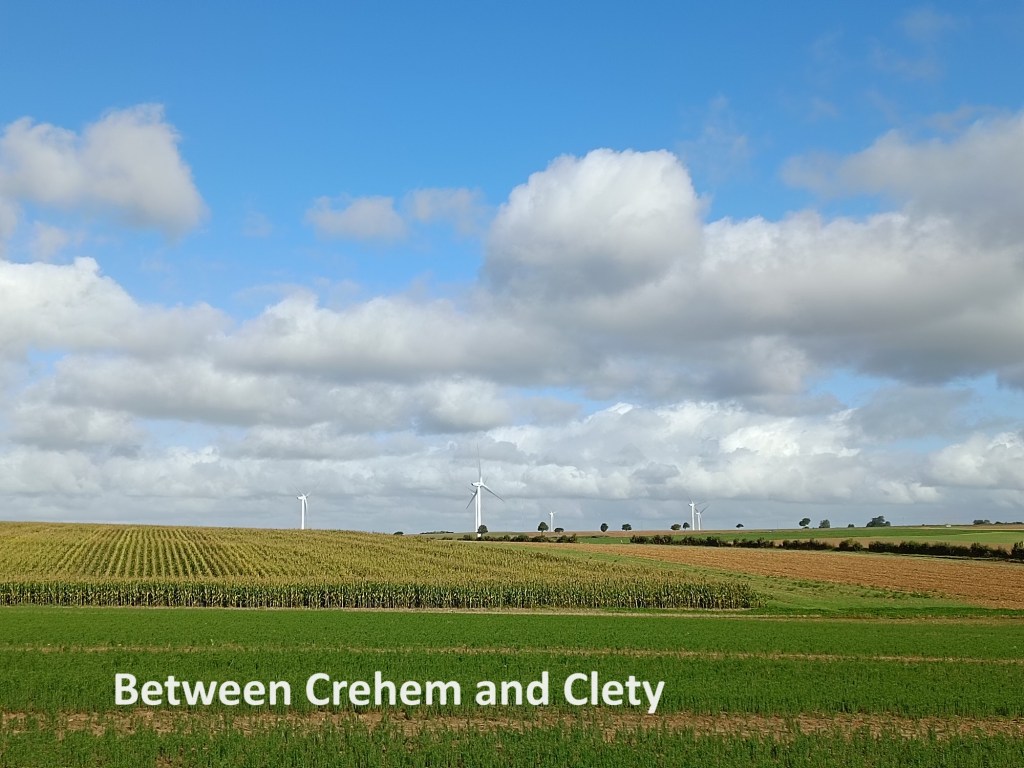
It had been a mixture of grey skies and blue from when I left Hallines pretty much all the way to Crehem, with clouds rolling in and patches of blue in between. After I left Crehem, the grey clouds finally dispersed, leaving just white puffball clouds here and there in an otherwise blue sky. I followed on along agricultural lanes, past cut grain crops, and corn waiting to be cut, until I reached Clety d’Aval. This is one of the outskirts of the village of Clety, if villages can be said to have outskirts. The trail does not go into Clety itself, but turns south and quickly comes to another village, Dohem.
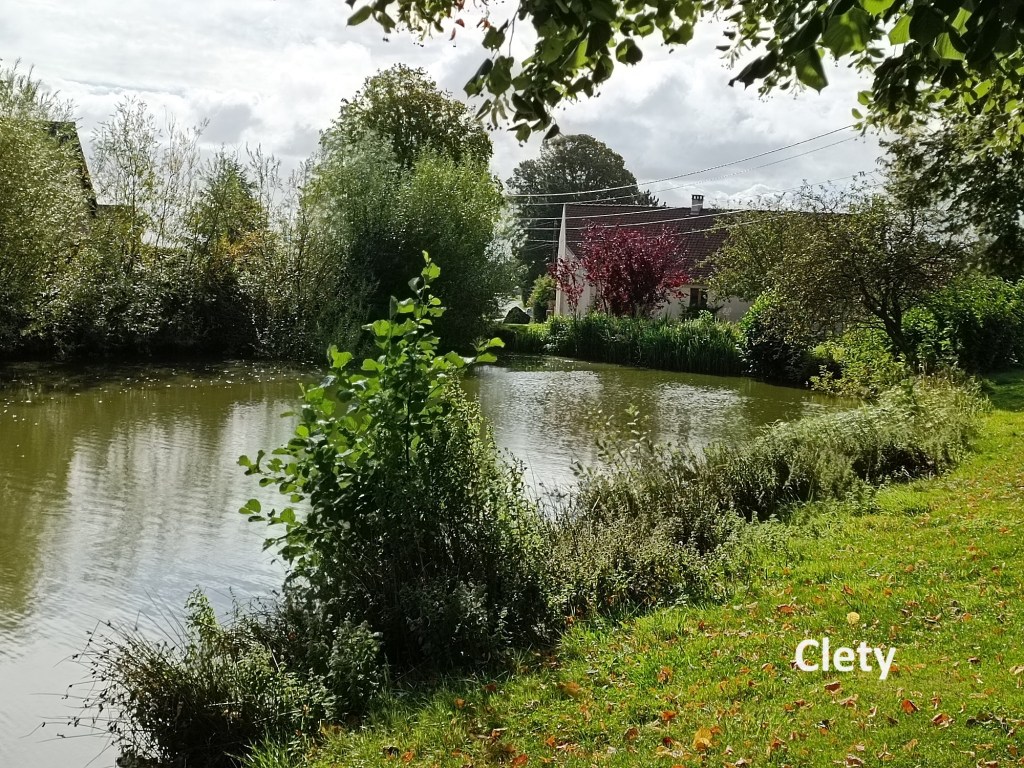

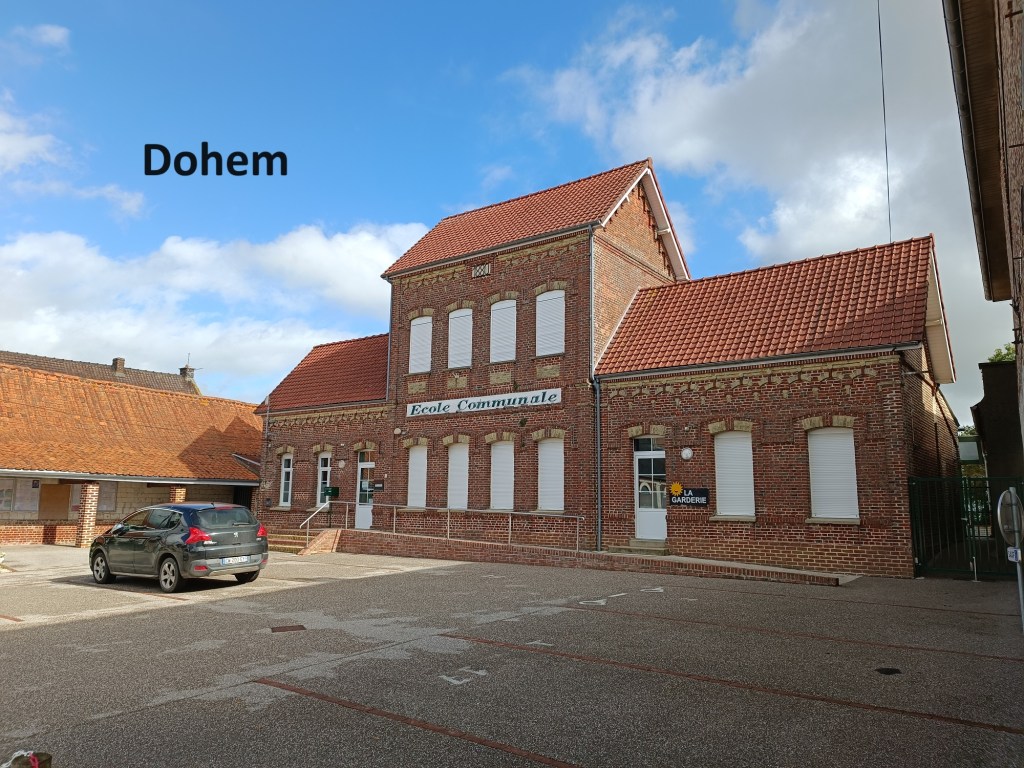
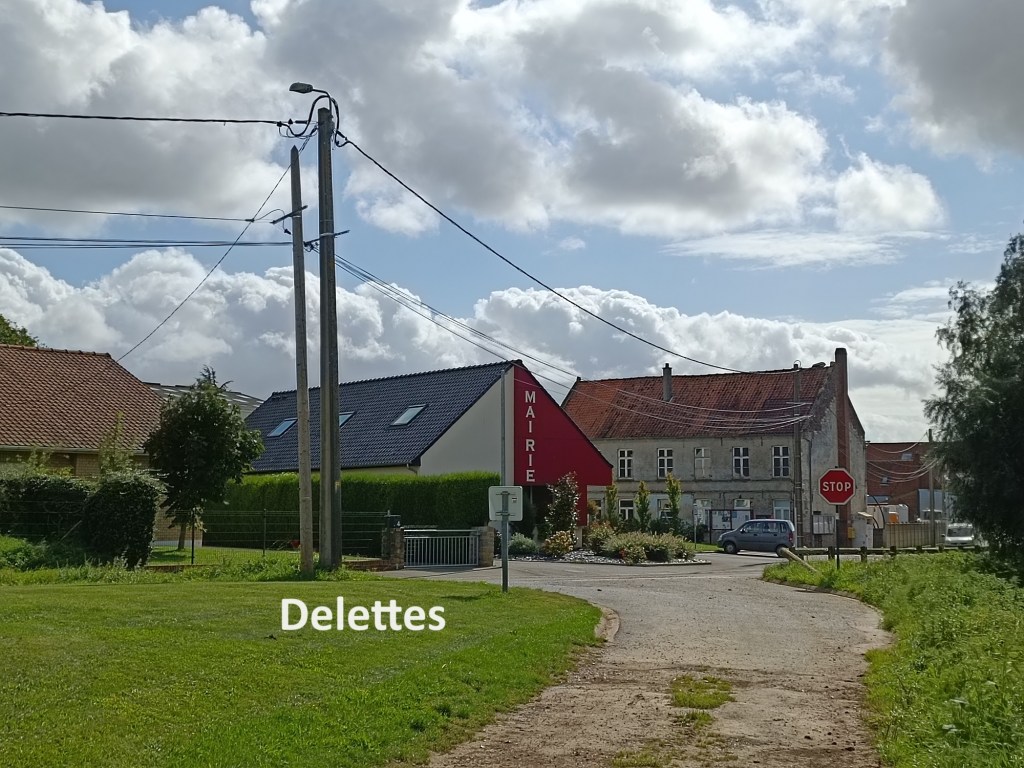
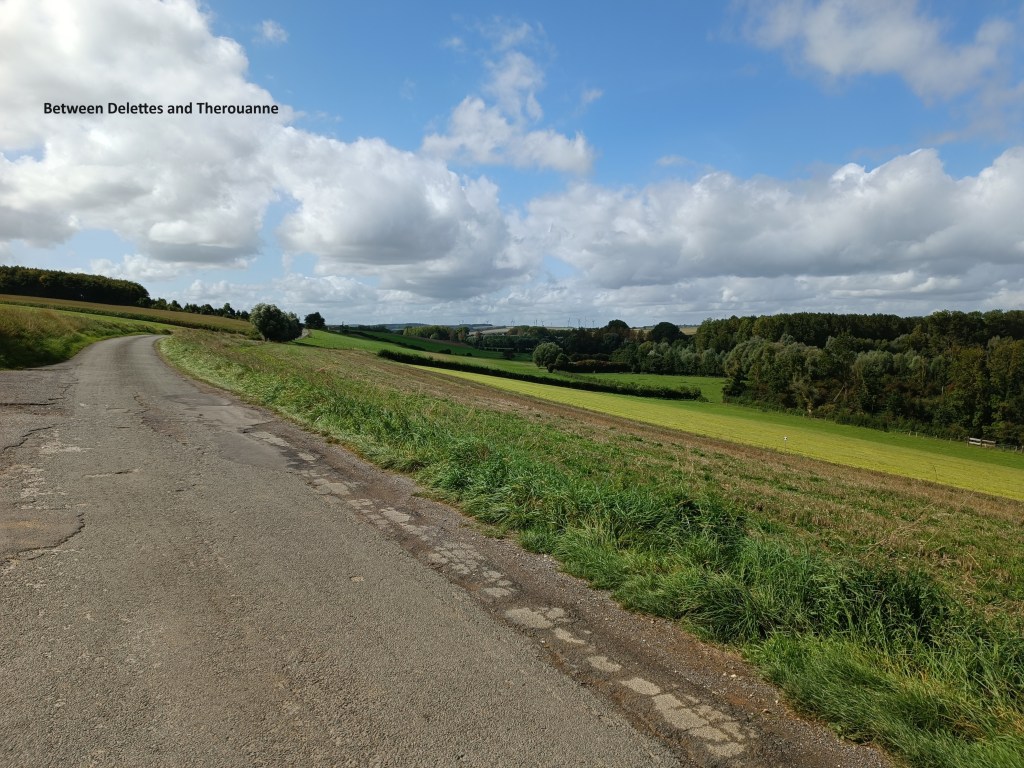
The trail goes around the eastern edge of Dohem, but I decided to go through the village. My only reward was to come across a small wayside shrine. In the centre of the village, there is a café beside the church, but both church and café were closed. A few kilometres later in Delettes, it was a similar story, and so I kept on going. After Delettes, the route goes to the higher ground to the south, and follows the Rue de Niettes, almost in a straight line to Therouanne.
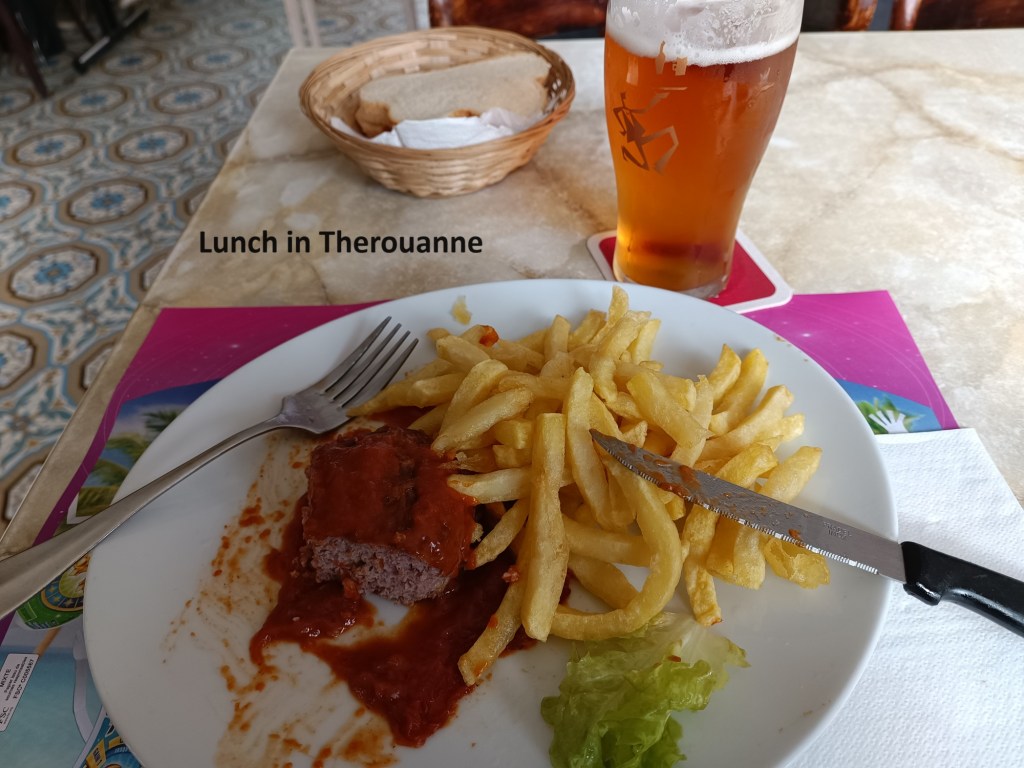
Compared to the villages that I had come through in the course of the morning, Therouanne is much more significant, with supermarkets, banks, and so on. I made it to one of the cafes in time to get lunch. It was one of those establishments frequented by the local farmers, with food that was sustaining and energy-giving, but not sophisticated by any means. But that was exactly what I needed. Thus refreshed, I made my way to the gite that was to be my accommodation for the night. The owner of the gite had sent me the code for the door, and I let myself in.
When I got inside, and just as I was picking out which bed in the dormitory would be mine for the night, I was surprised to find that the other walker that I had met in Licques was already there.. He introduced himself as Roberto, from the Milan area of Italy. We compared notes on our experiences since our last meeting. Like me, he had enjoyed the café in Tournehem. Unlike me, he had stayed in one of the two Abbayes in Wisques, and had gone from there that morning to get to Therouanne.
The coordinator of the gite, Christoph, came in later to check that everything was OK. The gite offers accommodation only, he explained to us, and does not do meals, neither dinner in the evening nor breakfast in the morning. He did explain, however, that there were both a supermarket and a boulangerie just up the street, so we should be OK.
While we were talking, the third resident for the night came in: Sylvia from Obwalden in Switzerland. She balked at completing the registration form for the gite, which required her age, but after discussion with Christoph, entered a figure. She too was walking the Via Francigena.
I picked up a few things at the supermarket to provide my dinner that evening, part of breakfast next morning, and even a few things for some other time on the road. The others also did their shopping. Roberto remarked that he could not go any longer without pasta, and he cooked a spaghetti dish. My own pizza and salad seemed a poor comparison. All three of us chatted for a bit about the route, our experiences, and plans. Then it was time for rest. Christoph had assigned us to rooms that dispersed us throughout the building, and so I got my uninterrupted rest in the dormitory away from the other two.


